Pillar guide
WiFi in a motorhome: how to get internet that works wherever you park
Campsite WiFi is fine for checking the weather. For streaming, video calls and a family of four on their phones, you need your own connection. Here is how a good setup is built.
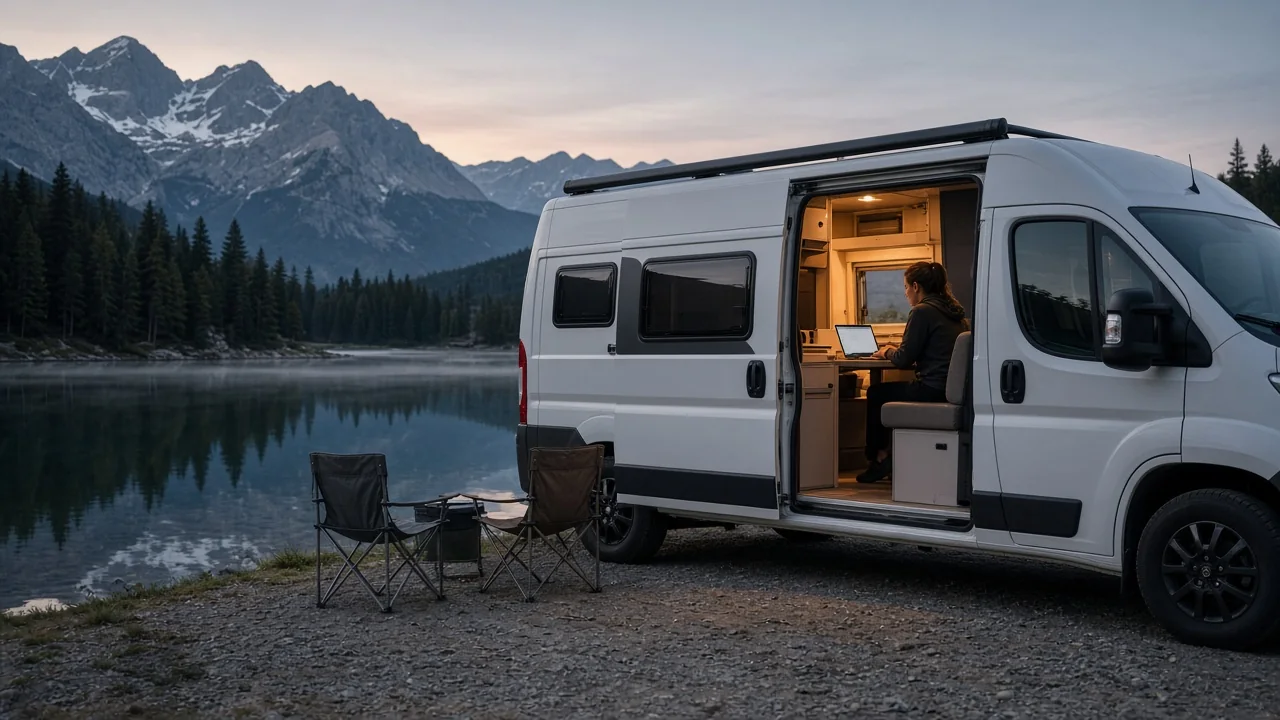
Ask ten motorhome owners about campsite WiFi and nine will roll their eyes. The network is shared by every pitch, the access point is usually by reception, and the code you paid for only works on two devices. Wild camping, aires and stellplätze rarely have WiFi at all. That is why most people who travel a lot end up with the same simple recipe: their own mobile router, a data SIM that roams across Europe and, if they travel often, an antenna on the roof.
How mobile internet in a motorhome works
A router picks up the 4G or 5G mobile network and turns it into a private WiFi network inside the vehicle. Phones, tablets, laptops and the TV all connect to it, just like at home. Because it uses the same masts as your phone, it works almost anywhere your phone has signal, and usually better, since a router has larger antennas and can sit higher up.
- The router creates the WiFi. A 5G router falls back to 4G by itself, which matters in rural areas where 5G is still patchy.
- The SIM or eSIM decides which networks you can use and how much data you get. A roaming data SIM can switch between several operators in each country.
- The antenna decides how much signal reaches the router. A motorhome body with an aluminium skin or insulated walls weakens the signal noticeably, so an outside antenna can make more difference than a faster router.
Why campsite WiFi is rarely enough
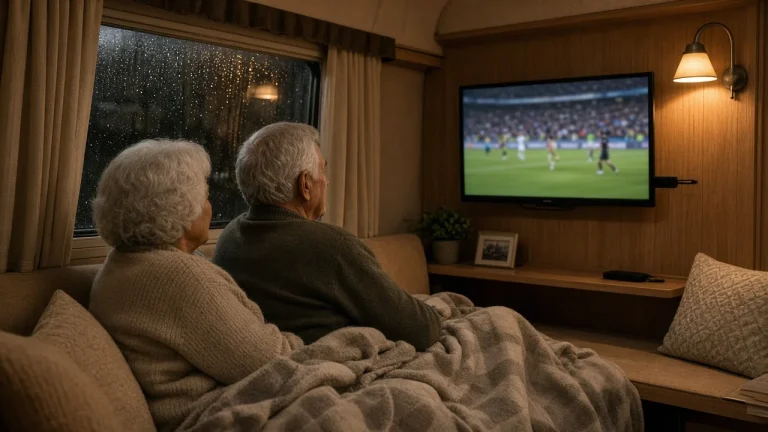
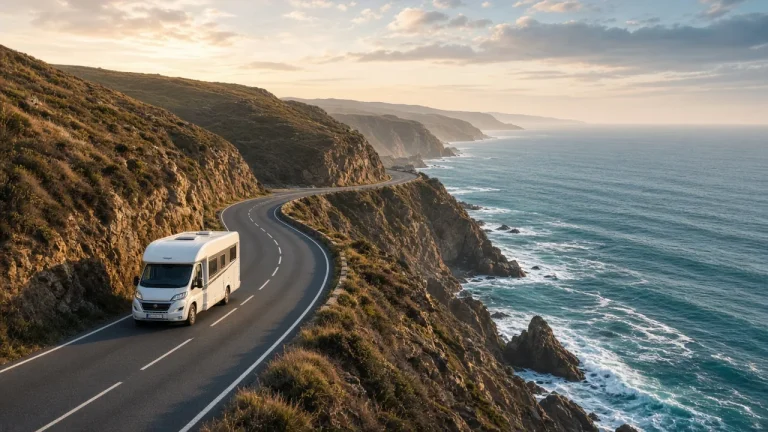
Campsite networks are built for light browsing. In the evening, when everyone streams at once, speeds often drop below what a single HD film needs. Many sites also block video calls or limit each code to a set amount of data. Your own router on mobile data gives you a predictable connection that follows you, whether you stay at a big campsite on the coast or a quiet aire in the hills.
A tip from our support team: before you blame the network, move the router. Up by the skylight or on the dashboard often gives a much better signal than in a cupboard by the floor.
Portable router or fixed installation?
If you take the motorhome out for weekends and a summer holiday, a portable router is usually all you need. You charge it, put it near a window and take it into the holiday cottage or the hotel when you are not in the van. Our Hybrid Traveller has a battery that lasts more than eight hours and can also run on 12V while you drive.
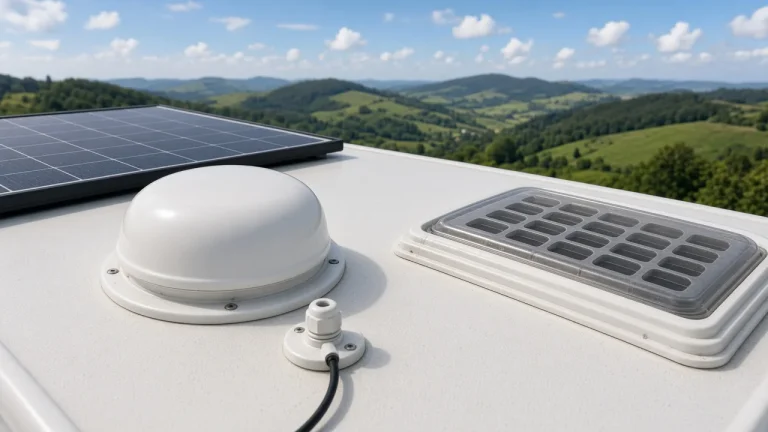
If you live in the van for months, work on the road or often stay in rural areas, a fixed router on the 12V system with a roof antenna gives you a steadier connection and one less thing to charge. Our guide to choosing and fitting a motorhome roof antenna covers cable lengths and mounting.
Power: 12V, USB or 230V
A router uses very little power, typically a few watts, so it will not drain a leisure battery in a weekend. Run it from a fused 12V socket or a USB outlet rather than an inverter, which wastes energy converting to 230V and back. If you are on hook-up, the normal mains adapter works too.
A setup that works for most motorhomes
- A 5G router that falls back to 4G, portable for occasional trips or fixed for long stays.
- A roaming data SIM or eSIM with a data package that matches how much you stream.
- A roof antenna if you often park in the countryside, in valleys or behind trees.
- 12V or USB power so the router can stay on when you are off grid.
Travelling outside your home country? Read our guide to mobile internet in Europe by motorhome, which explains EU roaming rules, long stays and countries outside the EU.
Frequently asked questions
Does campsite WiFi work for streaming?
Sometimes, early in the day. In the evening the network is shared by every pitch and speeds often drop too low for HD video. A router on mobile data is far more predictable.
Can I just use my phone as a hotspot?
For an hour or two, yes. For a whole trip a router is better: it has stronger antennas, does not overheat, keeps your phone free and lets the whole family connect at once.
Will a router drain my leisure battery?
No. A mobile router typically uses a few watts. Even if it runs day and night it uses only a small part of a normal leisure battery's capacity per day.